Showing posts with label sisters in scribe. Show all posts

Friday, August 12, 2011

MOAR Contests!

In case you missed it, we're giving away a signed copy of BAD TASTE IN BOYS by Carrie Harris over at my crit group's blog Sisters in Scribe.


Enter Here Hurry, the deadline to enter is this Sunday, August 14th!

And, Maggie Stiefvater just released the awesome stop-motion-animation trailer for THE SCORPIO RACES! And in celebration, she's giving away a signed and doodled in ARC!

Check out the amazing trailer which she animated herself, and wrote and performed the music for it!


And get all the details on how you can enter to win HERE

Tuesday, December 28, 2010

Two-fer Tuesday

Just three days left to enter the giveaway at my crit group's blog Sisters In Scribe! We're giving away THREE signed brand new finished copy books! What can you win?


The Demon King (Seven Realms #1) by Cinda Williams Chima
The Maze Runner (Maze Runner #1) by James Dashner
Wake (Dream Catcher #1) by Lisa McMann

So head on over and ENTER! Deadline to enter is 12/31.

Also, Tangled Fiction is taking a break this week, which means you can catch up on the stories we've posted so far! All of our stories are up as full posts rather than in parts. You can find them in Tangles Past: The Story Archive

And if you ever wondered what's going on in our brains when we're writing, check out our first WTF were you thinking? Chat! We posted the highlights this week. We start new stories next week!

Friday, October 15, 2010

Friday Five

If you've noticed I've been posting less this week it's because I'm neck deep in revisions. I have a self-imposed deadline and I intend to meet it! Hopefully with something that makes sense. Cutting 25,000 words or so and adding 30,000 new ones hurts my brain. Anyway, onto the Friday Five!

- Over at my crit group's blog Sisters in Scribe we have an awesome guest post by Andrew Jacobson of the new Middle Grade Fantasy series THE FAMILIARS! Stop by and check out the post for a chance to WIN a copy of THE FAMILIARS! Ends October 30th.

- Next weekend I will be heading to Minneapolis to the Kidlit Con 2010! I'm especially excited because I'll be meeting 2/4 of the girls from Tangled Fiction there, Anne Marie and my CP Natalie C Parker! Are you going to be there? Let me know! I'd love to meet you!

- I LOVE this post by TH Mafi, which is so my life right now. 6 Things You Lose When Writing A Novel. Plus she's having a contest right now where you can WIN $100 for books! (No that's not a typo. That's one hundred dollars. For books!)So go check it out. And if you haven't been reading her blog regularly, you should be. It's hilarious.

- How awesome was it seeing all those miners pulled out of the mine? That's the kind of reality tv I like. I think I cried almost every time one of them came out. And I don't really cry much. I swear!

- The SCBWI conference I went to last weekend was AMAZING! I learned so much. This year's focus was on Fantasy and Sci-Fi and Cinda Williams Chima gave two awesome workshops on world-building, and hooking your readers. Once I finish my revisions I'll go through my notes and share what I learned, but in the meantime, you should totally check out her books. Her most recent is the second in her Seven Realms series The Exiled Queen. I got a copy of the first book in the series, The Demon King, signed and will be giving it away over at Sisters In Scribe.

Hope you have a great weekend! I'll be strapped to my macbook until I finish these stupid awesome revisions!

Wednesday, August 11, 2010

Books (and other things) That Push Me To Write Better

I liked the topic of my Sister In Scribe Kristi's post so much yesterday that I thought I would do my own post on the things that push me to be a better writer.

The most recent experience I've had with this feeling isn't from a book at all. It's from THE BEST MOVIE EVA!!! a movie.


I saw Inception last week, and I left the theater with one thought in my head:
I can do better.


The level of ingenuity and depth of emotion in the storytelling of the film blew my mind. It really just sort of stopped me in my tracks and I thought about the plot issues I was having with my current (and what feels like, the millionth) revision and it all seemed so small and silly. I realized not just that I needed to up my game, but HOW MUCH I needed to up it. Somehow I'd slipped into playing it safe, and safe = boring and seen it before. So I took a step back and started really ripping my tiny little impersonation of a book apart and all of a sudden I was excited about revising it again!

There are other books I keep in mind when writing as touchstones. Books that when I'm in a good mood, inspire me to attempt to reach some of their greatness and on a bad day thrust me into the pit of despair as I think I will NEVER write anything that good!

Some of those books are:

The Harry Potter Series by J.K. Rowling - because Jo Rowling's world-building and heart blow my mind every time I read one of the books.


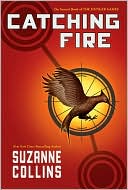
The Hunger Games & Catching Fire by Suzanne Collins - again, the world-building! The action! The emotion! Even now I get teary-eyed when I think about Rue!


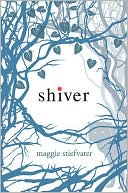
Shiver by Maggie Stiefvater - I love how poetic the writing is, the emotion, the sense of place, and the way she made two narrators such complete unique characters that you always know who's talking. I especially love that she created her own mythology.


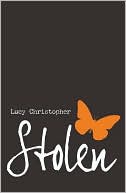
Stolen by Lucy Christopher - This story is so emotionally complex and moving, it still haunts me. And the detail to setting is so good that every time I think about it, I feel like I'm in the desert of the Austrailian Outback. I can completely see a place I've never been or even seen photos of.


Before I Fall by Lauren Oliver - I love the way she makes the ordinary beautiful in this book. The actual prose is beautiful and very poetic but it's also the way Sam observes things. I also love that she made very real, three-dimensional characters who could be unlikeable at times and made me care about them.

All of these books (and SO MANY more) do things that I hope to do in my own stories and they remind me that it IS possible to do if I just keep my focus on the goal. Also, I've just realized that all of these books have made me cry! I guess that's what sticks with me. And that's what I want to do, tell stories that stick with you.

What are some books that inspire you?

Wednesday, June 16, 2010

What Agents Wish You Knew - Or Why You Should Wait Until Your Book Is REALLY Ready To Query!

When I was just a fresh-faced Midwesterner, brand new to LA, I thought, hey, I'm in LA, maybe I should be an actor! (Because, you know, everyone was doing it.) So I started going to these Casting Director (*Casting Directors are the ones who go out and find actors, and audition them for roles in movies) workshops where actors would get a chance to hear a Casting Director speak about what they're casting, and give out some acting advice. One of the things I heard over and over from Casting Directors was "We want you to be good."

No one believed them.

The veteran actors who had been auditioning for years were sure that it was just some line they used to make them sound good, (because Casting Directors only wanted already famous people, anyway). And newbie actors thought, why would that famous casting director care about me? I'm nobody, there's no way they'd ever cast me.

It wasn't until I became a Casting Director myself and was faced with casting 6 major roles in my own film that I understood. It's true, Casting Directors are praying that every single actor that walks through the door is so amazing that they're THE ONE. They get excited by each new face they see. They really truly want actors to be good.

Here's why:

1. Auditioning actors is very time-consuming.
- First they have to sort through hundreds (literally) of headshots to find the ones who look most like what the role requires.
- Then they have to schedule auditions for all those with the right look (that might be a hundred again).
- Then they have to sit down with each one of those actors and have them read through the scene, narrow down the good ones, and do it all over again until they have 5 or 6 of the best that they can take to the director and producers.

If an actor comes in who is so amazing that they get immediately skip ahead to the meeting directors and producers stage, think of all the time the Casting Director has saved!

2. When a Casting Director finds the perfect actor for a role, that actor and film can win awards, which means more recognition and more money for the Casting Director. It's not in their best interest to cast their Uncle's cousin's best friend's kid. It just isn't.

Hmm... Does any of this sound familiar?

If you substitute Writer for Actor, Agent for Casting Director, and Editor and Publishers for Director and Producers, (and okay, obviously, books for movies) it sounds a lot like the publishing world, doesn't it?

So this is what I want you to know:

AGENTS WANT YOUR BOOK TO BE GOOD!

Before they click open your email they probably say a silent prayer like, Please God let this one be THE ONE!

Even though they might complain about their overflowing inboxes, they secretly thrill at all of those potential bestsellers just waiting for them.

How You Can Take Advantage Of This Knowledge:
DO NOT SEND YOUR BOOK OUT UNTIL IT IS THE BEST THING YOU HAVE EVER WRITTEN

Then, write a query letter that SHOWS your book is THE ONE. (Don't write "This is the book you've been waiting for!" Just. Don't.)

Don't let yourself think, It doesn't matter anyway, it's not like that agent will ever really rep me, I'll just send my query/partial/full and get the rejection over with. (WHY WOULD YOU DO THAT?? WHY WOULDN'T YOU WAIT AND SEND SOMETHING YOU BELIEVED IN 100%?)

Because trust me, that agent isn't looking at their inbox thinking I can't wait to reject all of these losers today! They're thinking, PLEASE let this next one be THE ONE!

Tuesday, June 8, 2010

Telling When You Think You're Showing

You've heard it time and time again, SHOW DON'T TELL. If you have crit partners you've probably gone cross-eyed from reading it in your ms at one time or another. But you're past that now. You've worked hard on your prose, you're showing all over the place. Or are you?

Using internal physical reactions is a quick way to show a character's emotions. You've seen sentences like these:

My heart raced with fear.
Nervousness twisted her stomach.


These sentences seem, on the surface, that they're showing but in reality, they're telling. Why? Because it tells us what emotion the character is feeling. Fear, in the first sentence, and Nervousness in the second. Chances are, if the physical reaction is appropriate to the scene, that the naming of the emotion is simply excess information. This is sometimes called tagging your emotions and it's usually unnecessary.

In this case, that extra info creates a distance between the reader and the character. In a tense or emotional situation, the reader should be right there with the character, experiencing and connecting to everything the character feels. When something happens that causes your character's heart to pound your reader feels it, when you add in "with fear" you push your reader back a step because they're forced to process an external observation.

Think about it. When you're in the middle of a scary situation, you might notice your heart is pounding but do you actually think - hey my heart is pounding because I'm afraid? No. You just feel afraid.

I work with the rule of thumb that unless a character is experiencing an emotion that is unexpected (like, rather than fear, a character's heart pounds with excitement at being chased by an axe murderer) there's no need to name it. If you've done a good job at creating your character and revealing what makes them them to the reader, they will know what your character is feeling. And even more than that, they will feel a part of that character's experience.

Trust your reader! You don't have to explain everything to them.

Thursday, June 3, 2010

Invoking the Senses in Description

When writing description or "setting the scene" it's important that you tell us more than just what something looks like.

When setting a scene use at least three of the five senses in the description.

I've seen it said many times, so I'm not sure who said it first but most recently, Ellen Hopkins spoke at my local SCBWI conference on this.

One thing she said that really stuck with me is that everyone has one or two senses that they respond to and focus on the most. While it's true that most people are visual and it's important for the reader to understand what they should be "seeing" it's not the only thing that draws a reader into a scene. Some people react strongly to smell, others to sound, or touch. If you leave those out, you could be distancing whole groups of readers who "can't connect" to your writing.

What are the five senses?
- Sight
- Hearing
- Smell
- Touch
- Taste
(and for writing purposes I like to include/separate internal - both physical and emotional - ie. heart pounding, etc.)

I think most of us tend to focus heavily on the visual when writing so, for example, if you want to set the scene as a summer evening at sunset you might say:

It was a typical summer evening. The sun was just setting behind the trees, coloring the sky in bands of red, gold, and purple.

That's nice, but it doesn't really give the full sense of what it's like to really be there.

Now here's the same night with the rest of the senses added in:

It was a typical summer evening. The sun was just setting behind the trees, coloring the sky in bands of red, gold, and purple. A slight breeze tickled the hair on my arms as it rustled the leaves of the Maple trees and carried the scent of the rosebushes throughout the yard.

See how incorporating touch (tickling), sound (leaves rustling), and smell (scent of the rosebushes) adds depth to the scene? There's something for everyone to relate to and it's accomplished in three fairly short sentences. It's succinct enough not to drag down your story, and active enough to not feel boring and/or tacked on.

If you wanted to add in some internal physical/emotional sense that also helps to set the scene before diving into the story, you might add on something like:

Even with the sun sinking, the heat of the day still pressed down around me, making even the smallest movement feel exhausting. -- But you know, say it better than that!

I find this tip most helpful during revision when I'm trying to flesh out scenes. If there's a scene you have that's not quite working take a look and see if there are some senses missing. They might be just what you need to turn a moment into an unforgettable MOMENT.

Pay attention to what senses you focus on the most. After Ellen pointed out that everyone has a dominant sense I realized I tend to focus mostly on the sight and touch and rarely mention sound unless it's plot specific. This helped me immensely in the re-write process.

If you think about it, the moments we remember most in books are the ones that we can really connect to and feel like we know exactly what the character is experiencing.

Re-read some of your favorite scenes and see how much sensory detail is included. If it's done well it's invisible and yet it totally adds to the overall experience.

I wanted to post an example from a published book but I don't have it with me. So I'll just tell you that one author I noticed that does this really well, is Kelley Armstrong. The particular scene I'm thinking of takes place in The Awakening, and at the beginning of the chapter, she completely creates the setting in about three short sentences. I'm going to have to get my hands on that book again and come back and post it.

What about you? What senses do you focus on the most? What are some great scenes (or great authors) you've read that suck you in with all your senses?

Monday, May 24, 2010

So Much Awesome!

So, lots of randomly awesome stuff has happened in the last few days!

I broke 400 followers, which means that the first bonus prize in my MASSIVE BIRTHDAY EXTRAVAGANZA CONTEST has been added!


Friday, I got invited to participate in the ABC Family PRETTY LITTLE LIARS Secret Keeper contest and today THEY SENT ME A DROID! Which I get to keep after the contest is over! It arrived in a box of dirt and I don't have Verizon, but I don't care, it's still awesome. It should be fun trying to keep up with the game while in NYC for BEA.

Also Friday, the awesome Elana Johnson announced that she SOLD HER BOOK! Go check out her blog to read about her inspiring journey to publication! Plus she's having a HUGE Book Deal Giveaway!

And finally, today my awesome crit partner Lacey was named one of the winners of this month's Secret Agent! (She's #3 Greyskin which you should read because it's awesome!) That makes the Sisters In Scribe 2 for 2 in Secret Agent!

And now I must go get ready for my flight to NYC tomorrow. BEA here I come!

Thursday, May 6, 2010

How To Inject Suspense Into Your Novel

This past weekend I attended my local SCBWI spring conference in Lansing, MI. It was all kinds of awesome. There were SO MANY great lectures and workshops and this is especially amazing because it was only a one day conference!

THE Jay Asher gave an inspiring talk on his 12 year path to publication. Seriously, 12 years! And how he held onto the idea that would become his first published book for years before he finally came up with the perfect story to execute it. (If you haven't read his NYT Bestselling book Thirteen Reasons Why yet, you really should.)

But you see, Jay Asher wasn't just there to tell us not to give up, he was there to teach. And I learned a lot. So here we go.

WHAT I LEARNED FROM JAY ASHER ABOUT SUSPENSE


One of your goals as a writer should be to keep your readers reading. Make your book un-put-downable. Don't give them convenient stopping places because they might not remember to pick it back up!

WAYS TO INJECT SUSPENSE

SLOWLY
We learn over time what happened to cause the situation the MC is in. Usually this type of story begins with the major event already having happened to the main character and throughout the story we learn bits and pieces of what lead up to that event, OR the main character is thrust into a new situation and as the story progresses we uncover the reasons why.

books that do this well: Thirteen Reasons Why by Jay Asher, Speak by Laurie Halse Anderson, Holes by Louis Sachar

BEWARE of gimmicky slow reveals. It can be difficult to pull this off without making the reader feel duped. A story like Speak works because the MC is too traumatized to even think about what happened. But if a reader gets 3/4 of the way through the book and discovers that even though they've been inside the MC's head the entire time the MC never once let on that they knew exactly what happened the reader will be frustrated. Wondering why didn't the MC just say so in the first place.

FASTER
Forcing the reader to flip pages faster and faster builds tension.
One way to do this is Pacing:
When things get tense/exciting, use shorter sentences and paragraphs.
White space on the page makes readers feel like they're moving through the book faster.
So that big, action-packed chase scene?
Don't fill it with long, winding, literary descriptions and huge blocks of fifteen line paragraphs.
Break.
It.
Up!
See? Dialogue can also speed things up this way.

This goes for emotionally suspenseful moments too. If a character is about to learn that her dad is having an affair, that can be every bit as tension-filled as fighting off a zombie attack.

BEWARE being obvious about this. It should be undetectable, so save it for the moments when it really is tense and use it to ENHANCE those moments, not to make your boring chapter about going to the dentist feel more exciting. (Because unless that dentist is a ninja assassin, it's not.)

CHAPTER ENDINGS
The end of a chapter is not the end of an episode/scene/event, it's the promise of something more. Let me repeat that because it's worth hearing twice: The end of a chapter is not the end of an episode/scene/event, it's the PROMISE OF SOMETHING MORE.

Ways to do this:
- What just grabbed me?!? (Think: A character walks into a dark room, he hears a sound, turns and something grabs his shoulder. He thinks OMG! What just grabbed me? And the chapter ends.) - This is a fairly cheap way to get the reader to turn the page. (According to Jay, all of the Goosebumps books work this way, but I haven't verified this.)

BEWARE: The problem with this type of cliffhanger is that it only encourages the reader to read the next few sentences to find out what grabbed the MC. Once they're read that, they can stop. This is often used when the reveal is not that exciting, like in the example I used, the beginning of the next chapter would reveal that it was just his friend that grabbed him, not some hideous monster, they would both laugh at how scared they were and the tension would be gone. Too many of these will disappoint your reader and they start to believe your book is just a bunch of cheap parlor tricks.

- Cut the Action Early - This causes anxiety in the reader. It's similar to the above example but instead it occurs in the middle of an event like a confrontation, fight or chase scene. The reader simply has to read the next chapter and find out what happens next.

- Hint at Stories To Come - This builds anticipation. If you wrap up a major event in a chapter, make sure that the end of that event sets up the beginning of the next one.

For Example: Your MC finally finds the magic box they've been looking for. Yay! (Do NOT end the chapter here.) But wait, what's that rumbling sound? Oh no! Dislodging the box from it's hiding space has set off a rock slide! How will they get out of this? (And... end chapter!)

BEWARE tying things up in pretty bows. When you wrap up a chapter with all the loose ends tied up you lose anticipation. There's no reason for the reader to keep reading because everything was just resolved. Coming from the screenwriting world, this is probably my biggest weakness when it comes to suspense. I think in scenes which means generally they end neatly, and then the next one starts somewhere else at some later time. Do not be like me.

books that do this well: The Hunger Games and Catching Fire by Suzanne Collins

Other Easy but Effective Ways to Inject Suspense:
- Prologues
- Countdowns
- Chapter Titles


What about you? What are some of your favorite ways to inject suspense? What books do you think do it well?

Thursday, April 22, 2010

There Is No Competition

As some of you might know, I was stunned and thrilled to be one of the winners of Miss Snark's First Victim's Secret Agent contest! (You can read my entry here - #6 Imaginary Heart) But after jumping up and down and blogging/tweeting/facebook announcing my win I started to think about that word.

Winner. What does it really mean? How can you "win" a subjective contest. And that reminded me of a an idea I've kicked around since my acting days. The idea that there is no competition especially not when it comes to art. (And writing is art, just in case you didn't know.) How can anyone win anything that's based on personal preference? The ten of us selected in this month's Secret Agent contest appealed to that agent at this time in her life. Another agent might not have liked any of the entries she chose.

It's the same with the stories you tell. What resonates with some people won't resonate with others, but does that mean that the story that a million people relate to is better than the one that only five people love? No. Especially if those five people love that book with their whole heart and soul.

Sure you can look at things like how much money a book made, how many copies it sold, but even that doesn't mean much. Books don't start on a level playing field. Some will have bigger marketing budgets, or people who really "get" the story and who it's for.

The point I'm trying to make is that if you base your idea of success on the money you make, the number of books you sell, or the awards you receive, you're going to live a frustrating and disappointing life. Because there's always going to be someone with more opportunities than you, or who's "better" than you at something. And when you focus all your energy on distilling what the "winner" did into a formula and executing it just to beat that one person or thing, you rob yourself of the freedom to create what speaks to you most. The thing that could be your own personal biggest success ever.

Besides, a win for one writer is a win for us all because it means people are buying books!

With that, I leave you with two quotes I came across in the awesome book The Art of War For Writers by James Scott Bell

In the end, a first-class you is better than a second-hand version of somebody else. Write books that can't be clumped with a bunch of similar ones.
- David Morrell

Don't worry about trying to be better than someone else. Always try to be the very best you can be. Learn from others, yes. But don't just try to be better than they are. You have no control over that. Instead try, and try very hard, to be the best you can be. That you have control over.
- John Wooden, legendary UCLA basketball coach

Thursday, April 8, 2010

Success - It's All About Attitude

Today I bring you a Note from the Universe to remind you that even when you're stuck in what feels like limbo, waiting for someone to request your ms, sign you as a client, or buy your book, you're not powerless. No matter how much it feels like someone (or something) else has all the control, only you have the power to create the life you live.

Here's what The Universe says about achieving your most daunting goals:

Invariably, when big dreams come true, and I mean BIG, there is a total metamorphosis of one's life. Their thoughts change, their words change, decisions are made differently, gratitude is tossed about like rice at a wedding, priorities are rearranged, and optimism soars.... Yeah, they're almost annoying.

You could have guessed all that, huh?

Would you have guessed that these changes, invariably, come before, not after, their dream's manifestation?


Isn't it amazing how sometimes things are so obvious but we never think about them that way?

The Universe has spoken! Now, go! Dream BIG!

Thursday, April 1, 2010

When Characters Know Best

My crit partner (and fellow Sister in Scribe) Kristi's excellent post on characters acting out of character got me thinking. While it's true that sometimes characters do something they normally wouldn't for a good reason, it's also true that sometimes we writers make our characters do things they know they shouldn't do, for no good reason at all. Most of the time, if we pay attention, our characters will tell us exactly that, it's up to us to listen and heed their warning.

We've all done it - had some great plot twist, or specific event that we needed to have happen no matter what. We made our characters get there, ignoring their protests along the way. What do I mean? How about an example!

Say you have a smart, feisty character, let's call her Veronica. Veronica is trying to solve the mystery of who killed her best friend. So far Veronica has done some sneaky spy-like investigating, racked up a bunch of clues, and run from a creepy guy who seemed to want to kill her too. Now it's time for the big reveal/fight for her life climax that you envisioned when you started this story. It starts when Veronica gets a phone call. A mysterious, very creepy, man, tells her to come to the woods alone at midnight and he will give her the evidence she needs to find out who killed her friend and put him in jail. After the call, Veronica's inner monologue goes something like this.

I have a bad feeling about that phone call. Only those stupid girls with big boobs and high heels in horror movies went out to the woods alone. He's probably going to kill me. I'm only 5'1", I don't have a weapon, and my cell phone doesn't get a signal out there. I know that if I go I'm as good as dead. I don't know why I don't call Logan to go out there with me, or why I wait until midnight and go out there by myself, but I do.

It sounds ridiculous doesn't it? As a reader you're wondering why would she be so stupid? Veronica is smart, resourceful and yet she's going to do something so out of character that even she recognizes it's a cliche and has no idea why she's doing it all for the sake of getting to the big action showdown sequence.

When your character says they don't know why they're doing something, or points out how cliche their actions are pay attention! It's your subconscious telling you that this plot point doesn't work. It means you're cutting corners, and cheating your readers out of a much more intense and exciting story.

In the example above, you would need to go back and ask yourself, Veronica's too smart to go just for a vague promise of information, so what would be enough to get her out there on her own? Have the caller hold her boyfriend hostage and threaten to kill him if she brings the police? Or if there's nothing that would get her out there by herself, what smart, resourceful thing would she do to protect herself? Notify the police and have them help her set up a sting?

With either of these options, you could still get that action-packed information reveal you'd been dreaming about, and you would have the added bonus of having your character act believably which always makes for a more satisfying story.

Don't get me wrong, this is not the same as a character not knowing why they feel a certain way. That goes along with Kristi's post. An action coming from an emotion, whether the character understands that emotion or not, is authentic. And when I say "no good reason" I don't mean the reason has to sensible, only that it has to make sense to the character. If Veronica wanted to go out to the woods by herself because she's a danger-junkie and loves the thrill, that would be fine. Stupid, but fine, as long as she knew that's why she was going and let us know that.

So the bottom line is, listen to your characters. If two of your characters have a conversation about how stupid something you're having them do is, chances are they (and your subconscious) are trying to tell you something.

Wednesday, March 17, 2010

Doubt

This is my weekly post over at Sisters In Scribe

Recently, I had one of those moments writers dream of. An agent read some of my writing samples on my blog and requested a partial.

Awesome, right? AMAZING! I was stunned and surprised (and let this be a guide for everyone hoping to draw attention to their work, two tips - 1. MAKE SURE YOUR EMAIL ADDRESS IS ON YOUR BLOG and 2. TAG your teasers!) and then moments later, the elation turned to that most evil of all emotions - DOUBT.

I won't get into what those doubts were, they were the standard fare that I'm sure you can come up with on your own. What I doubted is not the point. The point is that in a moment that should've felt like validation, I was personally invalidating myself.

The important thing is that I realized I was doing it. And 90% of solving a problem is figuring out what that problem is. (Okay I just made that up, it could be like, 78%.) Knowing I was having an irrational reaction helped to tone that reaction down and keep it from overwhelming me and convincing me that before I send anything I need to say, rewrite my entire book in the 3rd Person POV of a snail, and remove all instances of the word "the".

So what to do about doubt? I don't think it will ever go away. It's like the weather. Sometimes it has to rain, but you can prepare for it, and you can know it's not going to rain forever. If you're serious about being the best writer you can be, and creating the best work, then you will have moments of doubt. Even Mother Teresa questioned her faith!

Just make sure that when those moments come you recognize them for what they are - your desire to be your best - take a deep breath and don't email or delete anything until you've calmed down!

Wednesday, March 10, 2010

Staying In The Moment With First Person

This is my weekly writing post over at Sisters In Scribe be sure to check out our blog!

I usually write first person present tense. It feels most natural to me and it's what I'm used to from writing screenplays. For my current WIP I made the choice to write first person past tense because I thought it better suited the way I wanted the story to unfold. What I noticed almost immediately was that some of the energy of my story was lost. The ms starts with a short piece of necessary backstory (paranormal world-building) and then moves into present day. My problem was that the "present day" stuff still sounded like it was happening in the past. It was all telling. Then I stumbled across this quote by Tami Brown over at the blueboards:

The biggest hurdle, I think, is true for all first person narratives. It's what I call "let me tell you my story" syndrome. The narrator tells the reader about what happened to them rather than jumping into the middle of the action and letting it unfold with the reader right there in the middle. You can debate showing vs. telling all day, but having plenty of showing and a minimum of telling is very important in a first person story, in my opinion. If you "tell" too much that creates a huge distance between the reader and the story- the narrator/protagonist is literally standing there, blabbing, instead to acting, and that equals boring.

It's so interesting to me to read this, because I've found it doesn't happen at all in present tense. There's just not a lot of room for sitting around ruminating on the past in present tense, because you are by definition, in the moment. I looked over my (very) rough draft and realized that I had fallen into this trap of "let me tell you a story" which was making my characters distant and the story itself, less powerful because it was being told as if it had already happened rather than as it was happening.

Here's an example of some of the changes I made (and remember please that both of these are still rough drafts!):

The "Let Me Tell You A Story" version:
I had a bad feeling as soon as Jenna said “party at Snake’s,” but I ignored it. Snake, Jenna’s latest victim, was twenty-two, and when he wasn’t busy selling drugs to the rich kids at West Haven, he worked at his uncle’s body shop.

Jenna was stoked though, so what could I do? I had just dumped my boyfriend, it wasn’t like I had other plans.


The "In The Moment" version:
Jenna shoved her phone into her back pocket and flashed me a grin. “Party at Snake’s.”

My gut said bad idea, but one look at her face told me I had no choice. Jenna had that “new guy glow”. Even the pink streak in her hair looked brighter.

I shrugged.

Jenna rolled her eyes. “It’s not like you have other plans.”


See the difference? One is a character standing in some undisclosed place, musing on events that happened, and the other is that character actively experiencing those events. I think the second version feels much more connected to both the character and has more energy than the first.

I find for me that it's important to remember that just because the character is narrating in past tense, doesn't mean that everything happened in the past.

I'll leave you with my new favorite piece of advice on tense: When it's done right, tense should be invisible.

Wednesday, February 24, 2010

Keeping Track of Shiny New Ideas

This is my weekly post over at my crit group's blog Sisters In Scribe. Check it out!

If you're like me, whenever you're in the middle of doing something that requires all of your focus (say, revising your novel *cough*) that's when you get hit with a Shiny New Idea(!) I find if I don't do something with those ideas, right away, I lose the spark and can't always get it back.

What I do, is as soon as a SNI hits, I write it down. In as much detail as possible. I keep each shiny new idea in it's own notebook. Specifically, Mead Five Star 1 Subject Notebooks, like these:
(I am perhaps, a little obsessed with them.) I buy them in every color possible because I have synesthesia and the color of the notebook is important to me. Seriously. Like, my current SNI is in a dark blue notebook. I could never write it in say a red, or lime green one, because the story is most definitely not lime green. Which sounds crazy, but trust me when I say this all makes sense. Anyhoo.

I like to free write.

Generally, I start with the bio of my main character. Most of my ideas start with either a character or a "what if". My current SNI started with a "what if" about a boy. So I knew both the situation and the character.

I label a blank page CHARACTER(S) and scribble down everything I know about this character, and usually, just the act of doing this reveals more and more info about the character and the plot.

After that, I label a new blank page BASIC INFO and write out the basics of the plot starting with a logline, like: A boy does ________ and learns _______. Or whatever. Then I go into more detail. Again, just the act of putting down vague ideas makes them clearer and adds in more detail.

I never pressure myself about this. This is all fun. It's like cleaning out a closet. I try to take every single thought I have about this idea and just get it on paper so that later I can go through it and know what I was thinking, the vibe of the story, etc.

I think in scenes so once I have my character and basic situation (plot) I tend to have a jumble of visual images and emotions of things that happen in the story. I start a new page labeled - can you guess? Yep, SCENES and I try to write out everything I see and hear (my ideas tend to play out like movies in my head) about the scene. I then ask myself, what happened? What lead up to this moment? Why is this happening? What happens after this? I write out all the dialogue I "hear", even if it doesn't totally make sense, because I don't want to miss anything that just might be brilliant.

The best thing about this process is that it opens up my mind to more ideas about the story. I discover new characters, and events within the story world, and that keeps it brewing in the back of my mind while I'm working on what I'm supposed to be doing. I will usually come back several times to add thoughts, new character details, songs for a playlist, etc. It also gives me piece of mind that my story will still be there when I have the time to devote to it.

By the time I'm ready to work on that story, I usually have my main character's voice, all my key scenes and plot twists worked out.

Using a separate notebook for each idea gives me the added bonus of feeling productive. I get a rush when I look at my stack of ideas and know that I have some cool ideas that I'm excited about waiting for me. I don't feel lost, or overwhelmed because I've already done most of the work in just a few minutes of stolen minutes of free time each day.

What about you? Do you have any writing obsessions like my notebooks? What do you do with your Shiny New Ideas?

Wednesday, February 17, 2010

The All-Important First Chapter

Last week I entered Miss Snark's First Victim's Secret Agent contest (see my entry here) and got some GREAT feedback on my work. Since the contest deals with the first 250 words, all of which I rewrote for the contest, I thought this was a great time to talk about first chapters.

This is my weekly writing post at my crit partners' blog Sisters In Scribe.

Last summer I attended the Iowa Summer Writing Festival. I took a workshop on first chapters called "Frontloading: The Crucial First Chapter" and the thing I learned that stuck with me the most was that the first chapter is a promise to the reader. It tells them what kind of story they're going to be getting, and what to expect. This is true, even if you don't intend for your first chapter to do that, because it's the way we read. Breaking that promise can frustrate, and disappoint your reader.

That doesn't mean you should give everything away. You don't have to reveal your plot twists, but if your book is a sci-fi thriller, don't let your first chapter read like chick-lit.

By the end of the first chapter, the reader should have some sense of what the main conflict of the book is going to be. They don't need to know all the details, but they should be able to tell the genre, have a good sense of who (what type of person)the main character is, and how their world is changing. Knowing these things sets up anticipation in the reader, it makes them want to read on and see how the events unfold. Not knowing these things makes the reader wonder what the heck this book is about, and if they should even bother to read on and see what happens.

EXAMPLE:
Here's an example of a book with a great first chapter:

The Hunger Games - In the first chapter of The Hunger Games we get to see Katniss' everyday world. We learn about the Hunger Games and the Reaping and the high chance that Gale and Katniss will be picked. We see that Katniss is responsible and protective of her sister, Prim, whose name is in the Reaping for the first time. And in the very last sentence of the chapter there's a shock as Prim's name is called. This is a GREAT end of a first chapter. As a reader we are left with a sense of dread. We know what Katniss must do, and we know that we're in for an exciting ride because we're going to experience the Hunger Games with Katniss. We're also introduced to the mechanics of Collin's writing - cliffhanger chapters. Both with story and with structure, she has shown us what to expect, and how to read her book. And she delivers. (Seriously, if you have not read this book yet, go get it NOW.)

Now imagine if The Hunger Games started differently. What if the first chapter was an ordinary day at school for Katniss, followed by time at home dealing with her mother and sister. Suzanne Collins could've started there and gone into greater detail about Katniss' troubled relationship with her mom, given us more history on the District, how life in The Seam works, etc. She could've had the Reaping happen in chapter 3. If she had though, she probably would've lost a lot of readers. I know I would've been flipping back to the cover over and over again, wondering when these supposedly awesome Hunger Games were going to start. I probably would've put the book down before the action started and picked up something else.

The first chapter is the last chapter in disguise.
- Richard Peck


I read this quote for the first time not long ago and was struck by how true it was. Richard Peck says that when he finishes his first draft, he always throws out the first chapter without reading it and writes a new one.

I thought about why it is that the first chapter is usually the one that needs the most work and I think I figured out at least part of why this is true.

Usually, at the beginning of a story I am bursting with ideas and information. I know my main character is this, and her love interest is that, and then this, this, and this are going to happen, all because of THAT! And so I'm excited to get to that stuff, and I start laying down all the pieces and facts necessary for the later events to occur.

I've come to realize the first chapter, (and the whole first draft really) but especially in the first draft, the first chapter is really just notes to myself. It's me getting that info out there so that I can remember to make it happen when the time comes.

After the first chapter, my writing tends to smooth out. I let things unfold the way they should, revealing information only when it's necessary. Most of the time this results in duplicate information. Things appear once, in the first chapter where they're not really needed, and again later on where they belong.

How to fix your first chapter.
I'm no expert, but here are a few tips that work for me:

  • Rewrite it from scratch.
  • Look for and remove exposition that doesn't come into play until later in the story.
  • Start at the moment closest to the beginning of the main conflict of your story as possible.
  • Make sure your chapter has action, and not just a character thinking about or looking at stuff.
  • Make sure the main conflict of your book is set up.
  • Ask people to read the first chapter by itself. What do they think the book is about? Do they want to keep reading?


You know you're on the right track if people have a sense of where your book is going to go and they want to go along with it.

What about you? What are some of your first chapter tips? What are some of your favorite first chapters?

Wednesday, January 27, 2010

Inspiration

This is my weekly post for my crit group's blog Sisters In Scribe.

I don't know if you're familiar with them, but I subscribe to Notes From The Universe. Monday through Friday, The Universe (as in the one we live in) sends me messages of encouragement and hope. They're tailored to my own personal life goals, but since one of those is to be published, I thought I'd share a couple recent ones today.

The trick is learning to maintain an unwavering focus upon your desired end result, your completed dream, the "finish line," without insisting upon, or even contemplating, its means of attainment, no matter how logical, obvious, or tempting it may seem.

I love this. It's so true. As so many have pointed out before me (most recently, Kiersten White had a great post on this) there is no magic formula for the next bestseller. Don't waste your time wondering if you've got the "right" story for the market, or trying to figure out the "next big trend". Just write your book the way you see it. Write the story you want to read. If you let the joy of the process come through in your writing, and you write what you love, others will pick up on that energy and love it too.

I've found that "The Secret" really works. Visualize yourself where you want to be in your career. Don't worry if you can't figure out the details, logic, or any possible way that you'll get there. Just write your book as though it's already sold. Already getting rave reviews.

It's so much more fun to be writing the best book ever(!) than it is to write a worthless piece of crap that will never sell.

People who do all they can, with what they've got, from where they are, no matter how puny their actions, how tiny their steps, or how futile it may seem, simply have more fun. Way.

Of course, to the uninitiated it doesn't appear that way. To them it appears as if only those taking gigantic leaps, who drive cars with fancy wheels, have loads of friends, perfect bodies, and fly around the world in First Class Sleeper Seats, are having fun. But what they don't realize is that we're often talking about the very same folks, just at different points in their journey.


Like Kristi said last week, it's all about baby steps! As long as you're moving forward you're going somewhere. I like this because it reminds me that everyone successful started out clueless and uncertain, but they're successful because they kept going even when it was scary, or difficult, or they were exhausted or discouraged.

A "no" is not the end, it's just another step along your journey to success.

What are some of your favorite inspirational or encouraging messages? What keeps you going?

Thursday, January 21, 2010

WIN a SIGNED copy of Blood Promise!

Sisters in Scribe - my crit group's blog - is having a contest!

We're giving away a SIGNED copy of the Vampire Academy book Blood Promise by Richelle Mead!

Check it out!


Richelle did a reading and signing at Barnes and Noble in Tribeca Monday night and Lacey was lucky enough to go.

What are you waiting for? Head on over and ENTER!

Wednesday, January 6, 2010

Waiting on Wednesday - 8

Don't forget to check out my weekly post at my crit group's blog Sisters In Scribe! This week I talk about ways to up your productivity!

WOW is hosted by Breaking The Spine. This week's choice is:

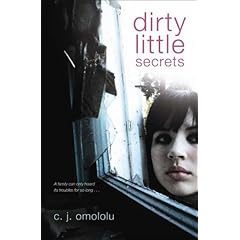
Dirty Little Secrets by C.J. Omololu - release date February 2, 2010


Everyone has secrets. Some are just bigger and dirtier than others.


For sixteen years, Lucy has kept her mother's hoarding a secret. She's had to -- nobody would understand the stacks of newspapers and mounds of garbage so high they touch the ceiling and the rotting smell that she's always worried would follow her out the house. After years of keeping people at a distance, she finally has a best friend and maybe even a boyfriend if she can play it right. As long as she can make them think she's normal.


When Lucy arrives home from a sleepover to find her mother dead under a stack of National Geographics, she starts to dial 911 in a panic, but pauses before she can connect. She barely notices the filth and trash anymore, but she knows the paramedics will. First the fire trucks, and then news cameras that will surely follow. No longer will they be remembered as the nice oncology nurse with the lovely children -- they'll turn into that garbage-hoarding freak family on Collier Avenue.


With a normal life finally within reach, Lucy has only minutes to make a critical decision. How far will she go to keep the family secrets safe?


Dirty Little Secrets is C.J. Omololu's debut YA novel. I'm dying to read it. I find that show Hoarders so fascinating and this book sounds so good.

Wednesday, December 30, 2009

Writing Tip: Uncertainty - why it (sometimes) sucks!

Wednesday is my day to post over at my critique group's blog Sisters in Scribe. If you haven't checked it out yet, you should. My partners post some really interesting stuff. Since we're just getting started, I thought I would share my post this week here on my blog as well. Here goes:

Recently I read a really good book. Really good! It was full of action, adventure, drama, suspense, and emotion, and it was also full of one of my pet peeves. The dreaded uncertainty that is seemed like, appeared as if, almost.

You know what I'm talking about. One character says to the MC, "I hate you!" and the MC's inner monologue says "He punched the wall, as if he was angry." Really? It was like he was angry, but you're not sure if that was it? Maybe he just likes punching walls? Maybe wall-punching means happiness?

This occasionally drives me insane.

I notice this happens most often in books written in close third person. I think it's because when writing in first person it's easier to slip into the character's distinct point of view and feel what they're feeling.

Think about it. In your own life, if someone shouts at you "I hate you!" and then punches a wall, you have a strong instant reaction. You don't think to yourself, "I wonder if he's angry?" You think, "Whoa, this dude is pissed!" Even if you're wrong, and he does just like to punch walls for no reason, you have interpreted his words and actions and made a decision on what they mean.

Characters are like this too. They jump to conclusions. They reason out why things are happening. I know that, especially in third person, there's a fine line between staying in one character's close POV and crossing into another's. This is where the trouble starts. Writers worry that if they say too much about what is happening, or how someone is feeling that they are switching POVs or crossing over into omniscience. I say, HOGWASH!

While it's true that unless your main character is a mind reader, he can't know what others are thinking. He can definitely take an educated guess or decide for himself how to interpret what he sees. When I see a lot of this in a manuscript I'm critiquing, I always write "Be authoritative!" and "Either it happened or it didn't. Which is it?"

Don't tell me "It seemed like the door opened all by itself." When I see this type of sentence structure, I expect a "but". As in "It seemed like the door opened all by itself, but it was just the cat leaning against it." When you leave the sentence as "It seemed like the door opened all by itself." and the character doesn't do any exploring to find out how it actually did open, I'm left wondering, did the door open by itself or not? You know whether it did or not, why not share? Your character, having witnessed this event, should have come to a decision about whether or not the door opened on it's own - even if it's the wrong answer. And if your character really can't tell if it opened by itself or not, then he needs to try and find out why (or run away in terror, whichever he's more prone to do).

I may be in the minority here, but I think it's best for your character to see things through his own world view and save the uncertainty for when he really doesn't know what's going on. If you stay focused and true to your character's personality and voice, it should be clear, even in third person, that what he sees happening is what he thinks is happening, and not absolute fact. To me this is one of the best things about telling a story through one person's eyes. Each character has a unique way of seeing things. What one character thinks is evil spirits haunting his house, another thinks is just the wind. Find out what it really is is what storytelling is all about!